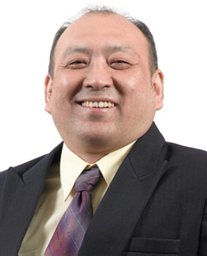
Prof. Joel J. P. C. Rodrigues🎓︎ IEEE Fellow Federal University of Piauí, Brazil Bio: Joel J. P. C. Rodrigues (S’01, M’06, SM’06) is a professor and senior researcher at the National Institute of Telecommunications (Inatel), Brazil, senior researcher at the Instituto de Telecomunicações, Portugal, and Senior Visiting Professor at the Federal University of Piauí, Brazil. He received the Academic Title of Aggregated Professor in informatics engineering from UBI, the Habilitation in computer science and engineering from the University of Haute Alsace, France, a PhD degree in informatics engineering and an MSc degree from the UBI, and a five-year BSc degree (licentiate) in informatics engineering from the University of Coimbra, Portugal. His main research interests include e-health, sensor networks and IoT, vehicular communications, and mobile and ubiquitous computing. Prof. Rodrigues is the leader of the Internet of Things research group (CNPq), Director for Conference Development - IEEE ComSoc Board of Governors, IEEE Distinguished Lecturer, the President of the scientific council at ParkUrbis – Covilhã Science and Technology Park, the Past-Chair of the IEEE ComSoc Technical Committee on eHealth, the Past-chair of the IEEE ComSoc Technical Committee on Communications Software, Steering Committee member of the IEEE Life Sciences Technical Community and Publications co-Chair, and Member Representative of the IEEE Communications Society on the IEEE Biometrics Council. He is the editor-in-chief of the International Journal on E-Health and Medical Communications and editorial board member of several high-reputed journals. He has been general chair and TPC Chair of many international conferences, including IEEE ICC, IEEE GLOBECOM, and IEEE HEALTHCOM. He is a member of many international TPCs and participated in several international conferences organization. He has authored or coauthored over 700 papers in refereed international journals and conferences, 3 books, and 2 patents. He had been awarded several Outstanding Leadership and Outstanding Service Awards by IEEE Communications Society and several best papers awards. Prof. Rodrigues is a licensed professional engineer (as senior member), member of the Internet Society, and a senior member ACM and IEEE. Title: To be determined ... Abstract: To be determined ... |
Prof. Chenguang (Charlie) Yang🎓︎ IEEE Fellow The Hong Kong Polytechnic University, Hongkong China Bio: Professor Chenguang Yang (Charlie) received the B.Eng. in Measurement and Control Technology from Northwestern Polytechnical University, China, and the Ph.D. in Adaptive and Neural Network Control from the National University of Singapore. He completed postdoctoral research in human robotics at Imperial College London, UK. Previously, he held professorships at University of Liverpool, University of the West of England (UWE Bristol) as well as South China University of Technology. He was leading the Robotics and Autonomous Systems Group at University of Liverpool and was leading the Robot Teleoperation Group at Bristol Robotics Laboratory. He holds fellowships with Institute of Electrical and Electronics Engineers (IEEE), Institute of Engineering and Technology (IET), Institution of Mechanical Engineers (IMechE), Aisa-Pacific AI Association (AAIA), and British Computer Society (BCS). He is a member of European Academy of Sciences and Arts (EASA) and a member of National Academy of Artificial Intelligence (NAAI). Professor Yang was selected as a Featured Author on IEEE Xplore in 2023. As lead author, he received the IEEE Transactions on Robotics Best Paper Award in 2012 and IEEE Transactions on Neural Networks and Learning Systems Outstanding Paper Award in 2022. He also was a lead contributor to the 1st Prize of Chinese Association of Automation (CAA) Natural Science Award in 2022. His current research focuses on embodied AI for robot learning, human robot interaction, and intelligent system design. Professor Yang served as President of Chinese Automation and Computing Society in the UK (2022-2023) and was the Corresponding Co-Chair of the Technical Committee on Collaborative Automation for Flexible Manufacturing with IEEE Robotics and Automation Society (RAS) from 2019 to 2025. He was an elected to the Board of Governors of IEEE Systems, Man, and Cybernetics Society (SMC) for 2023-2025, and has been an elected Administrative Committee (AdCom) voting member with IEEE Industrial Electronics Society (IES) since 2023. As a General Chair, Professor Yang organized the IES fully sponsored 25th IEEE International Conference on Industrial Technology (ICIT) in the UK, 2024. Title: To be determined ... Abstract: To be determined ... |
Prof. Maode Ma🎓︎ IEEE Senior Member Qatar University, Qatar Bio: Prof. Maode Ma, a Fellow of IET, received his Ph.D. degree from the Department of Computer Science at the Hong Kong University of Science and Technology in 1999. Now, Prof. Ma is a Research Professor in the College of Engineering at Qatar University in Qatar. Before joining Qatar University, he has been a faculty member at Nanyang Technological University in Singapore for over 20 years. He has extensive research interests including network security and wireless networking. He has led 26 research projects funded by government, industry, military, and universities in various countries. He has supervised 25 research students to get their Ph. D degrees. He has been a conference chair, technical symposium chair, tutorial chair, publication chair, publicity chair, and session chair for over 100 international conferences. He has been a member of the technical program committees for more than 200 international conferences. Prof. Ma has more than 500 international academic publications including over 250 journal papers and about 250 conference papers. He has edited a few technical books and produced over 28 book chapters. His publication has received over 10,000 citations in Google Scholar. He has delivered over 90 keynote speeches and 10 tutorials at various international conferences. Prof. Ma currently serves as the Editor-in-Chief of the International Journal of Computer and Communication Engineering and the Journal of Communications. He also serves as a Senior Editor for IEEE Communications Surveys and Tutorials, and an Associate Editor for the International Journal of Wireless Communications and Mobile Computing and International Journal of Communication Systems. Prof. Ma is a senior member of the IEEE Communication Society and a member of ACM. He is now the Chair of the ACM, Singapore Chapter. He has been serving as an IEEE Communication Society Distinguished Lecturer from 2013 to 2016 and from 2023 to 2024. Title: To be determined ... Abstract: To be determined ... |